Amazon's not-so-subtle influence on IMDb
Since 1998, IMDb (the Internet Movie Database if you didn't know) has been owned by Amazon. The online retail giant clearly has business interests that could benefit from ownership of a site like IMDb, and it might not be unexpected that they may wish to monetize the site by placing strategic ads. The IMDb homepage has remained largely free of advertising content though. E.g. here's how it looked a year ago:
Maybe Amazon are now falling on harder times, or maybe they have a lot of Hobbit DVDs that they really need to shift, because this is what greeted me today when I opened the IMDb home page on my computer:
Not altogether subtle. And what if you want to actually use IMDb to find out some more information about this latest installment in the Hobbit film series? Well, this is what you must endure:
This is horrendous. This is the IMDb page for a film…something which has, in the past, always given the reader an encyclopedic view of a movie. Now you have to scroll down to see any useful information and even then it is not easy to discern the actual content from the overwhelming amount of advertising material. What happens if I mask out everything which isn't actually IMDb info about the film?
At what point should we become concerned by Amazon influencing the IMDb ratings of movies that they would rather see portrayed in a more positive light in order to sell content from Amazon.com?
How to respond to a user's query: a fantastic example by Hover
A popular story on the Internet today was the tale of how lapse security procedures by PayPal and GoDaddy cost someone their very exclusive twitter account name (@n):
The story exposes how it might not always matter if you use ultra secure passwords, because the sometimes the weak point in any system is the human element. After reading this worrying account, I was moved to contact my own domain registrar (Hover) to find out if the same thing could happen to users of their service.
This is what I wrote:
Hi,
I’m sure you have heard the story today about the twitter user (@n) who had his name hijacked, partly through weak security by GoDaddy.
As someone who also relies on a personal email address tied to my domain name (managed by you), this made me wonder about how likely this risk was with other domain registrars. Can you vouch for the security of your system, and that your phone support staff wouldn’t accidentally divulge important information to someone posing as myself?
Keep up the good work,
K
I wasn't necessarily expecting a reply, let alone a speedy reply, so I was impressed to receive the following response within the hour:
Hey K,
It has been our policy that the phone staff does not give out personal information listed on a Hover account. We also will not make any updates to that account without direct consent after confirming the identity of the person making the request.
We're aware of the story that came out today, and although two-factor authentication has been in development (along with many other new features) it's priority has certainly been escalated. I have linked an article below that we posted a few hours ago on our blog to address any concerns that people may have about account security at Hover in light of this incident.
http://www.hover.com/blog/hovers-security-best-practices/
If you have any further questions, please feel free to contact me again or you can post them in the comments section of that post as well if you'd like.
Kind regards, Michael
What a great response. I'd recommend reading their blog post for more information. Also, I would generally recommend Hover to anyone looking to register a domain name (and not just because they have a great sale on at the moment). They make it fast and easy to get a domain name, and they don't pester you with emails. If you were thinking of using them, please consider using this referral link which would credit me with a couple of bucks.
Removing spaces from telephone numbers…it can't be done (at least not by T-mobile)
my $number = "555 123 4567";
$number =~ s/[^\d]//g;
This week I had to register a new data SIM card for my iPad. This SIM card is from T-mobile and affords 200 MB of data per month for free, which is a very good deal indeed. As part of the online setup process you have to provide a contact telephone number. I duly entered my 10 digit phone number in the following format:
555 123 4567
This is surely one of the most common way of specifying a (US) phone number, with spaces separating the area code (555) and exchange number (123). Yes, this is a fictional number. I think it is also not unreasonable to expect some people to format the same telephone number in any of the following ways:
555-123-4567
(555) 123 4567
+1 555 123 4567
It is clear though, that T-mobile can not deal with such complexities. Because, as soon as I tried submitting the web form, this happened:

Yes, I was greeted with Enter Digits Only For Phone Number. It is 2013, and regular expressions — a computational way of recognizing certain patterns of text — have been around since the 1960s. Perhaps T-mobile don't know about them.
The ability to extract just the digits from a series of characters which might represent a phone number is an exercise which is frequenly used when teaching about regular expressions. A Google search for removing spaces from phone numbers using regular expressions links to over 11 million results. Perhaps T-mobile has not seen any of these pages.
In the Unix & Perl course which I co-teach, we might suggest that students could strip non-numeric characters from a phone number using something like the following:
my $number = "555 123 4567"; $number =~ s/[^\d]//g;
This second line uses a negated character class to match anything which isn't a digit (\d) and replace globally (g) with nothing (//).
Scientists perfect a method for making cheese on toast
This recent press release from Britain’s Royal Society of Chemistry reveals a formula for making the perfect slice of cheese on toast. And here is that formula:
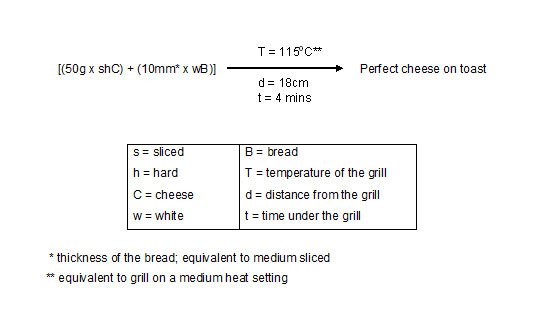
The work, conducted in association with the British Cheese Board, concluded that sliced cheese, grilled further away from the heat source, and grilled for about four minutes gave the best results.
Man stabs brother in dispute over missing mac and cheese
Not much that I can really add to this news report from clickorlando.com:
A 49-year-old man was arrested in Deltona late Tuesday on suspicion of stabbing his brother in a fight that started over some missing macaroni and cheese and spilled beer.
That is some serious sibling rivalry! The story goes on to reveal:
According to the Volusia County Sheriff's Office, a witness said Zipperer was at his home on Danforth Avenue when he became upset because he couldn't find his mac and cheese.
He must really like mac and cheese.
Five new ideas for possible TechHive podcasts
Earlier today I was taken to task on twitter by Jason Snell for my, admittedly harsh, review of a pilot episode of a potential new podcast for TechHive. He later mentioned to me on twitter that they (TechHive) are "seeking something that's not like every other tech podcast".
As a conciliatory gesture, I thought that I would try to come up with some (serious) ideas for five new tech-related podcasts that I might want to listen to. These are ideas that aren't really the sole focus of any current podcast (maybe I'm wrong and someone is already doing these sort of shows, please let me know if this is the case).
1. The Apple of your eye
The host invites a guest to talk about what their fantasy Apple hardware product would look like. Would it be a 12-bay Mac Pro with 16 PCI Express slots to suit the tastes of someone like John Siracusa, or maybe it would be an all-wireless iPod (inductive charging plus bluetooth headphones). The guests discuss how far away from reality this hypothetical product is, who would buy it, and how much it would cost if it could be made.
2. Macs for the memory
Take a trip down memory lane as the host and his/her very special guest rewind time to talk about how the introduction of a past Apple product changed their lives or set them on their way to a life of Apple fandom. Maybe it was their first ever Mac computer (a 2001 dual-USB iBook if you're interested), or their first ever iPod (for me, the much maligned 3G iPod), or maybe it was discovering the wonders of Apple's iTools service.
3. Macsimum Carnage
A shameless rip-off (it wouldn't be the first) of an occasional feature from BBC's Top Gear show. Every week the host of this video podcast attempts to destroy a perfectly fine piece of Apple hardware in an reckless, but highly unorthodox, fashion. Ever wanted to see someone steamroller a Mac Pro or see what happens when you put an iPod nano in the toaster? Now's your chance.
4. iCastaway
Another shameless rip-off, this time of the much loved BBC radio show Desert Island Discs. Each week a new 'castaway' reveals to the host what Apple products they would buy if stranded on a desert island (which luckily has 4 working power outlets and 1 working Ethernet port). Luckily, the castaway has a $2,000 Apple store gift card to spend (we assume that Apple will deliver to this particular desert island and will waive the delivery charge). The guest explains what they would buy and why, though the $2,000 must cover all cables, accessories, and software. Choose wisely!
5. The story behind the story
Each week, the host takes a current technology related story that is making the headlines and explores the issue in depth, going back to look at where this story arose and what longer-term significance might arise from the news. The story behind the story might focus on a single product revealed at an Apple event, the appointment of a new CEO at a major tech company, or even the relaunch/rebranding of a Social Media web site.
Calling time on 'Clockwise' - a review of the latest TechHive podcast
I listen to a lot of technology-related podcasts, especially those that discuss Apple products and the wider apple ecosystem. So it was a shoe-in that I would give a new podcast from TechHive a listen. The new podcast is called 'Clockwise' and was announced on twitter by its co-hosts Jason Snell and Dan Moren.
You can listen to the podcast here. This particular episode is the pilot and subsequent tweets by @jsnell suggest that the podcast might evolve in response to feedback. I really hope so, because I find the format of this show to be awkward. Painfully awkward.
Tech-related podcasts often take the format of either having two seasoned co-hosts (e.g. Mac Power Users), a main host and a guest host (e.g. The Talk Show), or a rotating cast of panelists with one main host controlling events (e.g. The Macworld Podcast). Clockwise fits into the latter category and if you were expecting it to feature intelligent, but sometimes humorous, discussion of current technology news, then you'd be right. So this all sounds good right?
Not quite. I say this because Clockwise tries framing the podcast with a game show-esque mechanism that is as clumsy as it is unnecessary. Rather than just having two erudite guests (Phillip Michaels and John Phillips) join the two co-hosts for 30–40 minutes of intelligent, round-table discussion, the show has been straight-jacketed with various rules that become increasingly bizarre.
These rules start with the requirements that a) each panelist introduces one discussion topic in turn and b) panelists discuss each topic but get a sum total of seven minutes to use across all four topic discussions. Should any participant exceed his or her seven minutes or talk time, they will then have to — and you might want to sit down at this point — remain silent!
The discussion proceeds clockwise, but the participants also need to keep an eye on the time, so they also need to be clock-wise. Geddit? This gripping format had me on the edge of my seat (though admittedly this was because there was a sleeping cat sharing the sofa with me). The podcast doesn't quite go so far as to add a ticking clock sound effect to add tension, though they do ring a bell when a participant finishes their discussion in each round. Otherwise, how would we know when someone else starts speaking?
While listening to the podcast, I was initially unsure whether these timing rules were just a private joke, but then Jason Snell explained the grim fate that would befall each participant who ran under their seven minute limit. They would have to — and again, you really might want to sit down before you read what follows — speak on a subject of their choosing to use up their remaining time! This 'Extra time' round is almost exactly like the tense finale at the end of Star Wars as Luke Skywalker races against time to destroy the Death Star and save the Rebel Alliance...except that it isn't.
I'm not sure whether these rules are meant to make us excited and/or nervous for the participants as we listen along ("Will they overrun?", "Are they sweating under the horological-induced pressure?", "Can Jason Snell really cope with having to speak for 1 minute 32 seconds on a subject of his own choosing?"). It feels at times that Clockwise is trying to be both an intelligent tech podcast and comedy game show all at once. However, in my opinion it ends up achieving neither.
At least the show gives us the thrilling 'Extra time' segment to look forward to. After 30 minutes or so of some relatively informed discussion, what topics would the panelists choose to speak about with their remaining time? One participant used this time to enrich our lives by revealing that he's recently been watching 'So You Think You Can Dance'.
After the 'Extra time' section, the show concluded with another segment which had some sort of theme but at this point I had lost the will to live and so my memory of this part is somewhat hazy. At an early point in this pilot episode, Jason Snell reveals that "We don't want to waste your time". Too late me thinks.
In my next post I'll be discussing my new panel-show podcast called 'McMacMac', a podcast where guests discuss the latest news from Apple, but must use a Scottish accent when naming any Apple hardware product. Failure to do so means the contestants must immediately eat a Big Mac.
Update: 6:33 pm, 5th June
Jason Snell has made it clear to me on twitter that 'Clockwise' should very much be thought of as a rough idea, a work in progress that is still being experimented with. It is not yet an official TechHive podcast and may never be; to quote @jsnell "The podcast literally doesn't exist". He expressed surprise that I posted a review of this podcasting experiment but in my defense:
- In a tweet posted to his 35,000 twitter followers, he included a link to an MP3 of the show and also explicitly asked for feedback
- He did refer to it as a 'tech podcast' (see previous link)
- He subsequently tweeted a link to the "official Twitter account of TechHive's Clockwise podcast"
Later asked whether he would be proceeding with the podcast, he may or may not have said "No we're not going to f***ing do Stonehenge"
Great balls of cheese: chow.com invent the 'Turducken of Cheese Balls'
From the #cheesenews 'culinary creations' desk…
You want your cheese to come sandwiched between layers of yet more cheese? How about 12 layers, featuring six different cheeses (and bacon, because you need bacon, right?). Maybe if scientists hadn't been so busy trying to do pointless things like put a man on the moon, we wouldn't have had to wait until 2012 before someone invented a 5 lb cheese ball.

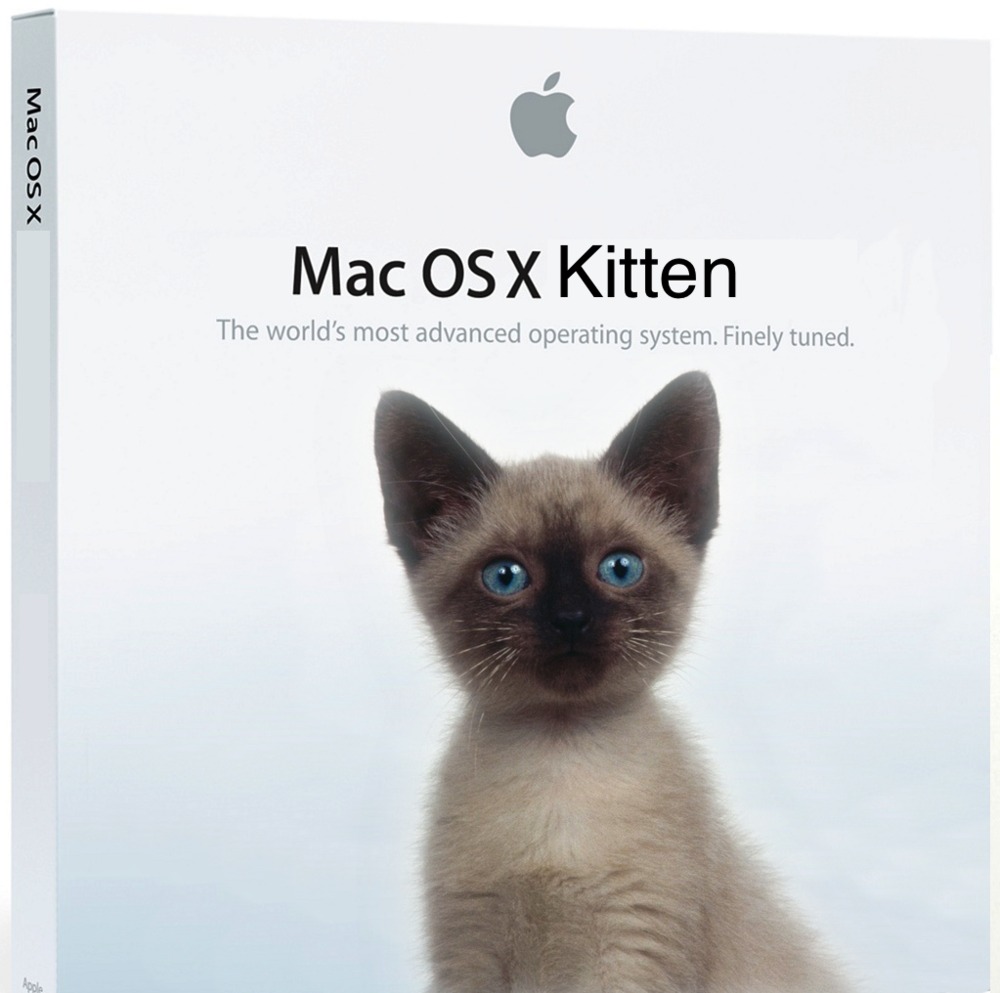
Details of Mac OS X 10.9 have been released
Thief hides stolen cheese in pants
The best #cheesenews stories often involve attempted robbery:
A Cookeville man has been banned from a local grocery store after he ran from from the store with two blocks of cheese in his pants that he did not pay for.
From the Cookville Herald Citizen.
Are you missing some Markdown? Maybe Simplenote is to blame.
I write a lot of short text notes, and for many years I have been storing these notes in the fantastically useful nvALT application on my Mac (this is a fork of the almost-as-useful Notational Velocity application). Making this tool even more useful is the fact that nvALT can sync all of the notes with the Simplenote service. This makes it easy to have your notes accessible from the web, or from a wide range of iOS, Android, and desktop clients.
Recently, I made a change to how I worked with my notes. Rather than storing the notes in a single database file, I used the option in nvALT to instead store each note as a separate text file. This means that you can store all of your notes in Dropbox which in turn means that they can then be accessed by even more apps (especially on the iOS platform, Notesy and Byword being my two favorites at the moment). An important point to note — no pun intended — is that you can still sync notes via Simplenote in addition to syncing via Dropbox.
One final point to make is that I often write many of my notes in the excellent Markdown format. In a nutshell, this is a plaintext format which can be easily converted into HTML, but is often very convenient even if you don't mean to convert to HTML. In Markdown you can write a bullet point list like this:
+ item 1: link to [Apple's homepage](http://apple.com)
+ item 2: some *italic* text
+ item 3: some **bold** text
And with the appropriate Markdown-to-HTML tool — often an included feature in many of the text editors that work with Markdown — this text will render as:
- item 1: link to Apple's homepage
- item 2: some italic text
- item 3: some bold text
So far, so good. What has been driving me crazy since switching to using Dropbox for my syncing is that my Markdown keeps disappearing. Not all of it though. So far this is a problem limited to the plus characters that are used to initiate list items. However, you can also create list items using asterisks. So earlier, I made a test note that looked like this (click to embiggen):

And then I waited, and after about a minute, the note had mysteriously changed to look like this:
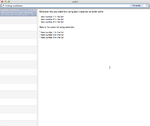
My pluses had been converted to space characters. At first, I thought this may be an issue with the new iOS note editor I was using (Notesy), but this is happening even when Notesy is not running on any iOS app. It turns out that the culprit was Simplenote. It's possible that it was due to the combination of syncing nvALT with both Dropbox and Simplenote, though I suspect that Simplenote alone was the culprit. Turning off the Simplenote syncing fixed the problem, and I guess this experience means that I will be sticking with Dropbox syncing in future.